NourishmentInMotion.
A considered resource for everyday eating — recipes, seasonal rhythms, and the quiet logic of feeding yourself well.
Explore the Guide
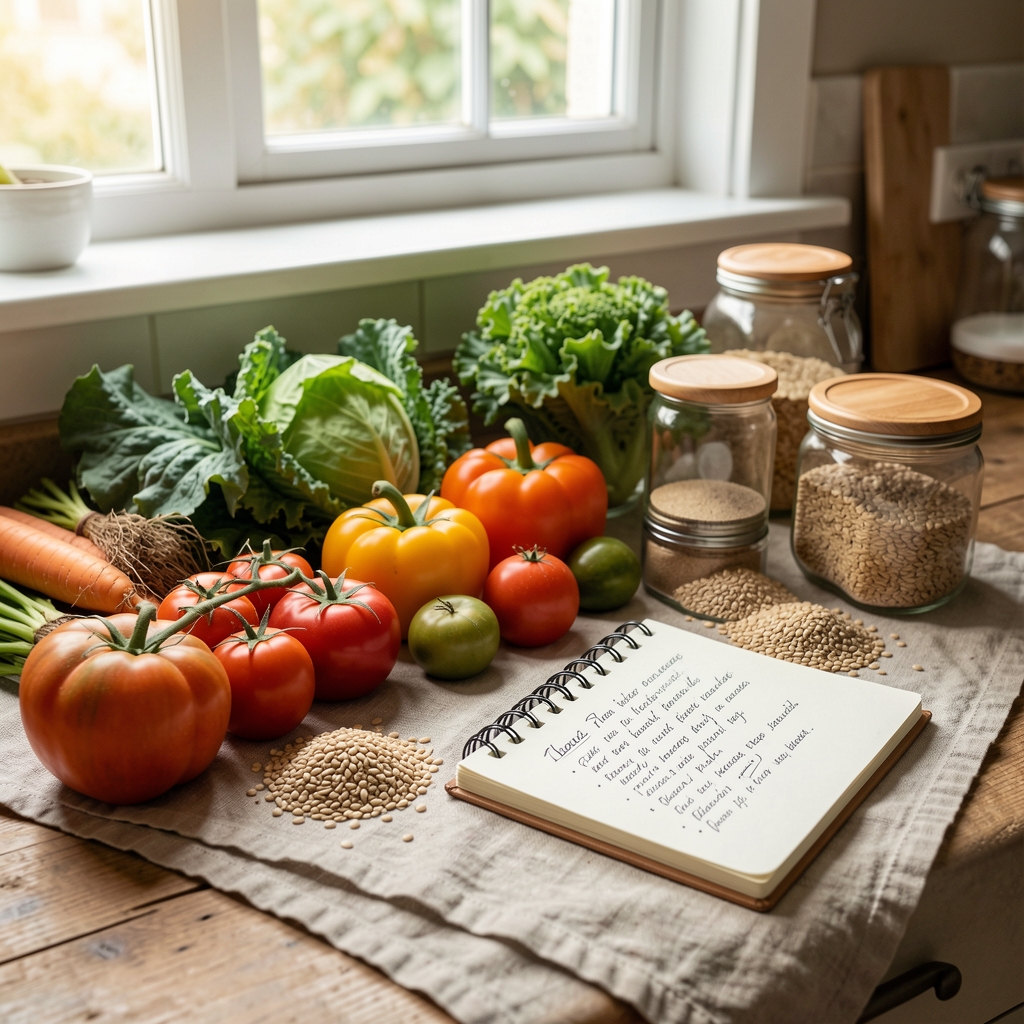
Seasonal Pantry, Considered Weekly
An examination of how the British seasonal produce calendar shapes what ends up on the table — root vegetables in winter, stone fruits in summer, and the grains that carry through both.
Reading Food Labels Without the Noise
A structured approach to understanding ingredient lists — what ordering tells you, which figures carry weight, and what can safely be ignored.
The Mediterranean Table at Home
Fermented Foods and the Gut-Friendly Kitchen
Kefir, kimchi, live yoghurt, sourdough — an editorial review of fermented foods within the context of a varied and balanced weekly diet.
Anti-Inflammatory Foods in the Ordinary Week
Turmeric, oily fish, leafy greens — documenting how these ingredients integrate naturally into everyday British cooking.
Pantry Staples Worth Knowing
The Logic of Slow Cooking
A study in patience and flavour — how lower temperatures over longer periods preserve nutrient density and alter texture in meaningful ways.
Food Quality Over Quantity — A Working Principle
The Tarlonek archive proceeds from a straightforward proposition: that the origin, handling, and preparation of food matters more than the volume consumed. This is not a revolutionary claim. What makes it worth documenting is how consistently it gets lost in the daily rush — the commute, the desk lunch, the evening meal assembled from whatever remains in the refrigerator.
Each entry in the archive addresses a specific aspect of everyday eating — meal prep ideas suited to the working week, batch cooking protocols that respect ingredient quality, an analysis of how fermented foods contribute to gut-friendly eating habits, and a continued study of Mediterranean-style cooking as a framework rather than a directive.
The writing does not traffic in absolutes. There is no singular correct diet documented here. What the archive offers is a considered body of observation: how whole food recipes behave across seasons, what nutrient-dense meals look like in a British kitchen, and how reading food labels becomes easier once you understand what each section is attempting to communicate.
"There is a quiet consistency to how well-fed people navigate their days. Not abundance, but attentiveness — to what is in season, what is prepared with care, what is eaten without distraction."
Cooking from Scratch
A methodical review of the case for preparing meals from raw ingredients — not as a moral stance, but as a practical framework for understanding what goes into the food you eat.
Plant-Based Cooking
An ongoing series examining how plant-centred meals are structured — from protein distribution across legumes and whole grains, to the role of fats derived from seeds and cold-pressed oils.
Meal Prep Ideas
Documented strategies for preparing components in advance — grains, roasted vegetables, dressed salads, marinated proteins — that compress the time required for weekday cooking without sacrificing variety.
Seasonal Eating
A quarterly review of what the British seasonal calendar offers — and how aligning food choices with seasonal availability affects both cost and ingredient quality over the course of a year.
Nutrient-Dense Meals
A compositional approach to meal planning — identifying which combinations of ingredients yield the broadest range of micronutrients within a realistic caloric framework for adults leading active lives.
Mindful Eating Habits
Observation-based documentation of how eating environment, pace, and attention affect the experience and adequacy of meals — with reference to emerging published nutritional research on satiety and awareness.
Slow & Batch Cooking
An editorial review of slow-cooking methods — including braises, one-pot grain dishes, and fermented preparations — and how batch cooking once per week reorganises the relationship between time and food quality.

Balanced Nutrition on a Pressed Schedule
The observation that most people want to eat well — and find themselves unable to sustain it past the first week — is not a character assessment. It is a design problem. The Tarlonek archive approaches it as such: what structural arrangements make a balanced nutrition practice more likely to persist?
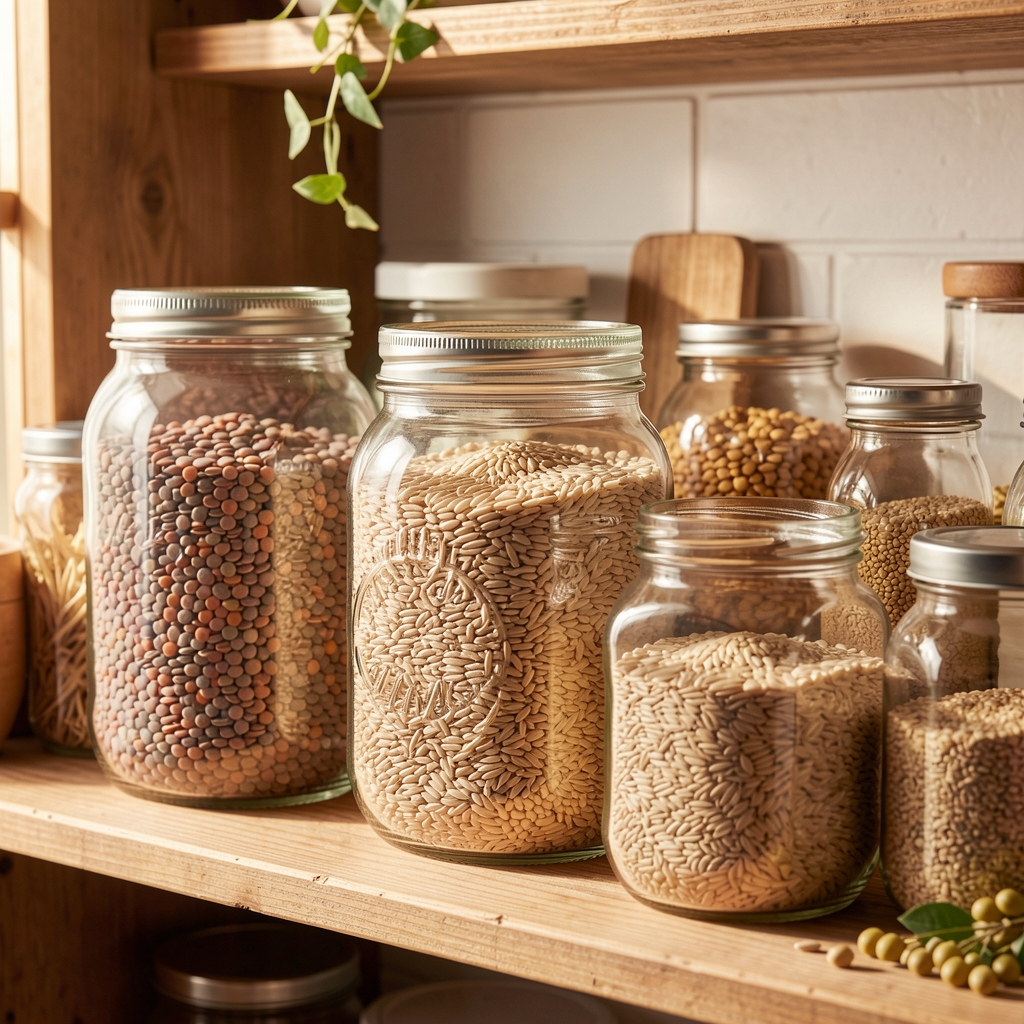
Documented approaches include a weekly grain-cook ritual (Sunday, forty minutes), a rotating vegetable pairing system tied to the seasonal calendar, and a set of pantry staples that function as the foundation for at least six distinct dinner compositions.
A practical guide to ingredient list interpretation — what the ordering convention means and which declared values carry real nutritional significance.
An evidence-based review of how portion calibration — rather than restriction — contributes to a more sustainable relationship with everyday eating.
Questions About the Archive
The archive documents practical aspects of everyday nutrition — whole food recipes, meal prep ideas, seasonal eating frameworks, and an analysis of how common food habits interact with a busy schedule. It is written in an editorial register: observational, evidence-informed, and without instructive claims.
The entries span a range of dietary orientations — plant-based cooking, Mediterranean-style eating, batch cooking with varied proteins, and gut-friendly recipes. We recommend speaking with a qualified wellness or nutrition professional before introducing any significant change to your daily routine, particularly if you have specific dietary requirements.
The archive treats portion awareness as a calibration exercise rather than a restrictive one. The documentation looks at how visual cues, plate size, eating pace, and ingredient density interact to produce different satiety outcomes — drawing on published nutritional research rather than fixed numerical targets.
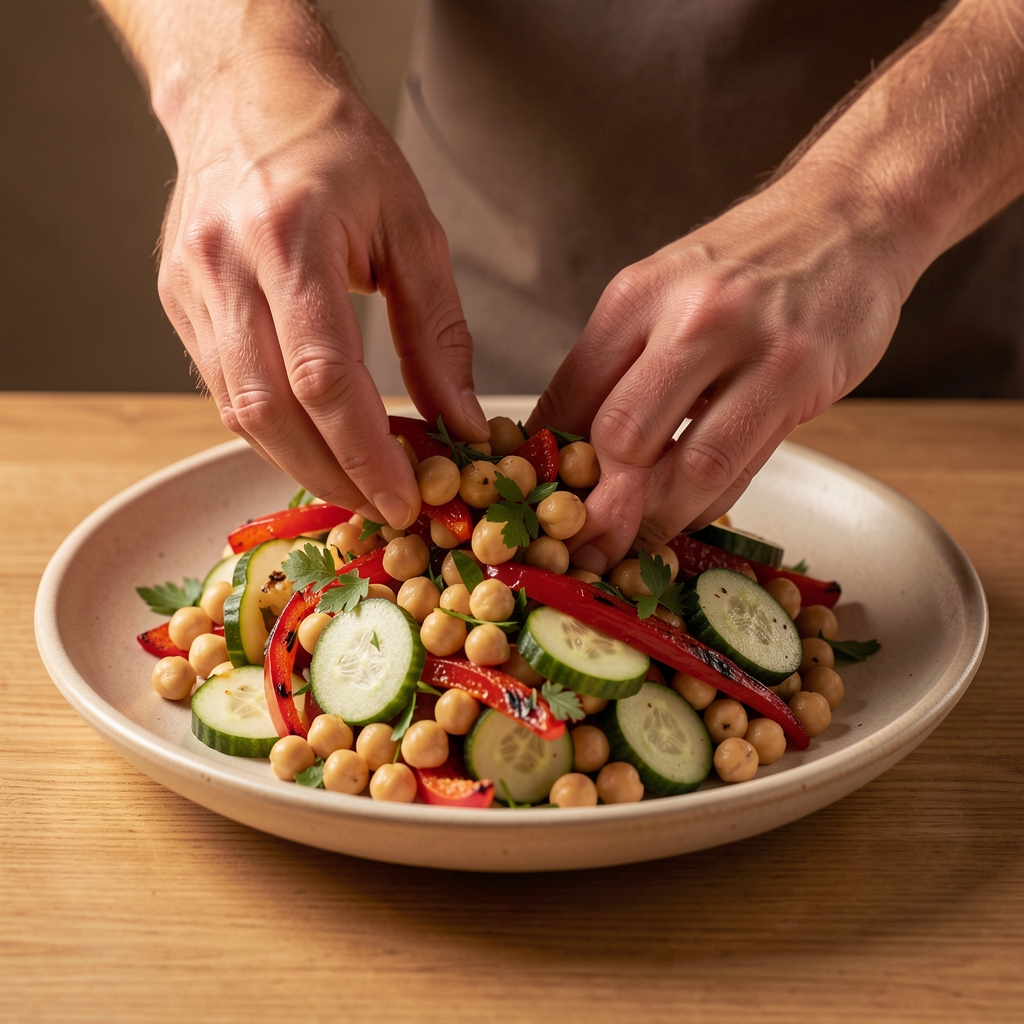
The Mediterranean series is structured as a practical framework adapted for the British kitchen — emphasising olive oil, legumes, seasonal vegetables, whole grains, and moderate fish consumption. Entries include documented recipes, sourcing notes, and observations on how the framework scales to a working week without requiring specialist ingredients.
The meal prep documentation is built around modular components rather than fixed recipes — a cooked grain, a dressed vegetable, a prepared protein — that can be rearranged across three to five different meals depending on what time allows. This approach is documented across multiple archive entries with practical timing notes.